Showing posts with label The Moon. Show all posts

Tuesday, 30 May 2023

Moon May 24, 26th & 28th


Taken over 6 nights 24th, 26th & 28th May. What a difference a few days make.

All taken with the 130 EDT and using the 2600mm. Not a planetary cam especially at 6 frames per second. A 2 panel mosaic for each image and an AVI run of 5minutes, Best 65% using Auto stakkert and Registax 6.


Monday, 27 March 2023

A bit more moon

 A couple of days later and a few more pics of La Luna. I found a new piece of processing software called Astrosurface. There are a few YouTube videos and was quite easy to pick up and produce some really nice details. 


Thursday, 23 March 2023

Another month goes by

So another month goes by and just one night for me of clear sky for some imaging, the current project is M96 and associated galaxies in the field of view, more on that to follow. But for now a full moon passes and a new moon offers fleeting new views. I say new views as a new neighbour a few doors down the road has cut down a a large number of trees from his back garden offering me a long missed sight of setting the new moon and Venus. Whilst dodging clouds I managed a few video captures and after a run through Autostakkert and Registax for Wavelet processing.  

This image is a composite of 2 images both the best 100 frames from a 500 frame AVI at the 1080 resolution from the ASIair Pro video capture.

Reducing the resolution does increase the frame rate but on a camera that is a full res 6 frames a second I am not expecting amazing results from a 2 minute capture. But here we go a couple of images of some lovely craters. 

Patavius is the large crater here at a 177 km in diameter and a depth of 3.4km. The multiple central peaks extend nearly 2km high.

I also had a few minutes to capture a quick video of Venus flickering like a jewel as it dropped into the trees. Stellarium shows a just under 80% disc illumination. My image shows the same. Not bad for about 100 frames stacked.


Monday, 27 February 2023

Well If it is there I might as well take a picture of it.

 Well it is here again above us for another week or so rising right between all these faint galaxies that need imaging. So I might as well take a few pics of it. 

My ZWO ASI 2600mm is not a planetary camera it records an not very impressive 6 frames per second however a couple of minutes of capture and a quick Autostakkert later. The ASIair software allows captures at various resolutions from 1920 all the way down to 240. I have attempted a couple of captures at this setting but the images are so pixelated it is not worth displaying. Working at a longer focal length now I need to capture a 2 pane mosaic to capture the full lunation.


Mare Serenitatis or the “Sea of Serenity” is a lunar Mare. A Mare is a large Basalt plain formed by ancient asteroid impacts on the far side of the moon that have triggered volcanic eruptions on the opposite near side some 3 billion years ago. The word Maria is latin for sea as to early astronomers these dark areas look like seas.

Ancient asteroid impacts on the far side of the moon nearly 4 billion years sent shockwaves through the moon causing volcanic eruptions on the opposite side or the nearside leaving huge Basalt lava basins. Known today as Mare these darker plains looked just like seas to the ancient astronomers and so they now bear their Latin name of Mare. Mare Serenitatis or the “Sea of Serenity” has not changed for billions of years. It has a diameter of 674km and has plenty of features. First we have the crater Posidonius a 95km impact crater located at the north east in this view. The rim of the crater is very shallow a clear indication of its age as it was filled by lava flows giving it almost an appearance of being slowly washed away. Just south of the centre we have a much smaller 16km impact crater called Bessell, circular in shape is an indicator of an impact from directly above as opposed to at an oblique angle creating ejecta in the surround area. The mountain range running north to south at the left edge is part of the Appenine range running nearly 600 km in length. Finally we have the locations of the landing sites of Apollo 15 & 17.


The top most crater of three central craters in the picture below. is Theophilus together with Cyrillus and Catharina they form a prominent group of craters. Theophilus rim rises about 4200m above its floor. It was created in the Eratosthenian period, so it is pretty old. Its central mountain is 1400m high and has four summits. Both Cyrillus and Catharina are much older craters – it can be easily seen how these craters overlap each other.


Monday, 2 January 2023

Shiney bright thing

 My scope is only 550mm focal length so not designed for lunar imaging. Also my camera is not a planetary camera imaging at just 6 frames a second. So no chance really of capturing good seeing. So the next 3 images are captured with the ASIAir pro. AVI processed in the software and the final jpegs are not huge in size. 


Saturday, 4 June 2022

3rd June Moon

Feeling a little frustrated with Pixinsight with calibration frames, so I spent an hour or so watching the setting moon on Friday night. Decided to roll back the dome and capture a few frames. A few frames is all the 2600mm pro is capable of per second so I captured an AVI for 3 minutes. Pre processed in PIPP and then rub through Registax. Not the sharpest but I like it.


Monday, 14 March 2022

Moon 12th March 2022

Not my most favourite object in the night sky, Captured on Saturday night approx 21.03.
AVI capture at just 4 frames per second, hardy a high frame rate but best 90% of 300 frames for each


Monday, 23 August 2021

The Moon

 Our nearest neighbour at 383,000 km from earth as of 23.30 ish on the 23rd August. Most will be unaware that during a lunar month the moon does not have a perfect circular orbit around the earth, and its distance to earth varies over the month by just over 50,000 km. Currently the moon is getting closer by a 1 km per second.


Friday, 2 April 2021

Moon

 A while ago I imaged the moon with the DSLR and here are a few results. Not the highest of resolution or greatest of contrast and sharpness, but none the less images with my own fair hand and processed in a way I enjoy.


Friday, 26 March 2021

Moon 26th March

 Gutted. I missed an ISS pass, I didn't think to check for one but saw it a second before I clicked record.


Pleased with the final image. I think best 500 frames from about 1500.


Monday, 28 December 2020

The Moon 28th December


The best 3000 from 5000 frames captured a few nights after Christmas. Using the new updated live video mode in the ASIair pro. A 4 minute AVI was pre processed using PIPP PIPP Planetary Imaging PreProcessor (google.com) allowing the ever trusted Registax 6 to process into a usable image. Processed in Photoshop and sharpened in Topaz Labz. 


Monday, 11 August 2014

perigee-syzygy

I am trying to refain from using the term "Supermoon", as it seems to inspire some strange questions from those whom think my interest in Selenology is being a member of the Celine Dion fan club.
No it won't start earthquakes.
No it wont cause a Tsunami.
No the world will not end..............

Therefore you can see my reluctance in using the phrase. The term "Supermoon" was first coined by an astrologer Richard Nolle way back in 1979 He claimed that this proximity of the Moon and the Earth has the tendency to trigger a series of natural disasters on the planet. In order to support his claim, he put forth a list of natural disasters in the past which he alleges happened as a result of this phenomenon. I say "WHAT A LOAD OF TOSH" So as you can see it is what you would expect from an astrologer. (pretend science) sniggering as I type.

Science fact.


Everybody knows that the Moon orbits around the Earth, but only a few people are aware of the fact that its orbit is not round, but is elliptical in shape. As a result of this shape, the distance between the Earth and moon varies from time to time. When the Moon is at its farthest point from the Earth, it is referred to as 'lunar apogee', and when it is at its closest it is referred to as 'lunar perigee'. In other words, the distance between the Earth and the Moon fluctuates between 221,000 to 252,000 miles - and lunar perigee occurs when this distance is somewhere around 221,000 miles.

My Image was taken last night between 21.39 & 21.42 at a mean distance of 222,483 miles.

Using my William Optics GT81 and my trusty Canon 40D I captured segments of the moon in series of AVI files. Processed in Registax 6 with a wavelet sharpening. Stitched together in Photoshop with a small contrast enhancement.
The opinions expressed about Astrology in this post are entirely my own.

Monday, 14 April 2014

A bay of rainbows


Without a doubt my favourite area on the lunar surface. Every capture of the bay of rainbows I try to tease out a little more detail. Not the most favourable of seeing as I ran 3000 frames. Processed in registax with my favoured wavelets setting. I think this is the most detail I have managed. My William Optics GT81mm 5 element Apo was the scope of choice with a 2 x barlow and the ZWO ASI120MC camera. Capturing around 40 frames per second for a huge 10.3 Giga bite AVI.

Saturday, 22 March 2014

More Mosaic fun

Taken 8th March with my home set up using the FLT-110 and the ASI 120MC.
This was the first test and I had set the gain to 0. It has made the capture lack detail and contrast and also underexposed. So a little experimentation will be required to increase the level of details captured during exposure.


This is a 2 pane mosaic of the Norhtern Appennine mountains.
Not my best effort but a capture of a very nice area.

Thursday, 20 February 2014

Lunar 100

Objects in the Lunar 100 are arranged from the easiest to view to the most difficult. This is more systematic than the haphazard approach that produced the Messier list. Indeed, just by knowing a feature's Lunar 100 number, you have some idea of how easy or challenging it will be to see. For example, the Moon itself is L1, while L2 is earthshine and L3 is the light/dark dichotomy between lunar highlands and maria ("seas"). I'd be surprised if anyone reading this couldn't tick those off the list right now. Higher-numbered objects are smaller, less conspicuous, or positioned closer to the limb, making them more challenging to locate and view.


I was going to wait until the list was more complete before posting.
My aim of course is to complete the list and image all 100. I could cheat by just posting a pic of the full moon and complete 99%. But where is the fun in that.. .

 I hope you enjoy my list


L Image List Feature Name Significance Lat. Long. Diam.(km) Rükl Chart
(°) (°)
1
   Moon Large satellite — — 3,476 —
2
Earthshine Twice reflected sunlight — — — —
3


Mare/highland dichotomy Two materials with distinct compositions — — — —
4
Apennines Imbrium basin rim 18.9N 3.7W 70 22
5
 
Copernicus Archetypal large complex crater 9.7N 20.1W 93 31
6 Tycho Large rayed crater with impact melts 43.4S 11.1W 85 64
7
Altai Scarp Nectaris basin rim 24.3S 22.6E 425 57
8 Theophilus, Cyrillus, Catharina Crater sequence illustrating stages of degradation 13.2S 24.0E — 46, 57
9
Clavius Lacks basin features in spite of its size 58.8S 14.1W 225 72
10
Mare Crisium Mare contained in large circular basin 18.0N 59.0E 540 26, 27, 37, 38
11 Aristarchus Very bright crater with dark bands on its walls 23.7N 47.4W 40 18
12 Proclus Oblique-impact rays 16.1N 46.8E 28 26
13 Gassendi Floor-fractured crater 17.6S 40.1W 101 52
14 Sinus Iridum Very large crater with missing rim 45.0N 32.0W 260 10
15
Straight Wall Best example of a lunar fault 21.8S 7.8W 110 54
16 Petavius Crater with domed & fractured floor 25.1S 60.4E 177 59
17    Schröter's Valley Giant sinuous rille 26.2N 50.8W 168 18
18 Mare Serenitatis dark edges Distinct mare areas with different compositions 17.8N 23.0E N/A 24
19
Alpine Valley Lunar graben 49.0N 3.0E 165 4
20 Posidonius Floor-fractured crater 31.8N 29.9E 95 14


21
FracastoriusCrater with subsided & fractured floor21.5S33.2E12458
22Aristarchus PlateauMysterious uplifted region mantled with pyroclastics26.0N51.0W15018
23
PicoIsolated Imbrium basin-ring fragment45.7N8.9W2511
24Hyginus RilleRille containing rimless collapse pits7.4N7.8E22034
25

Messier & Messier AOblique ricochet-impact pair1.9S47.6E1148
26Mare FrigorisArcuate mare of uncertain origin56.0N1.4E16002–6
27
ArchimedesLarge crater lacking central peak29.7N4.0W8312, 22
28HipparchusFirst drawing of a single crater5.5S4.8E15044, 45
29
Aridaeus RilleLong, linear graben6.4N14.0E25034
30
SchillerPossible oblique impact51.9S39.0W18071
31TaruntiusYoung floor-fractured crater5.6N46.5E5637
32Arago Alpha & BetaVolcanic domes6.2N21.4E2635
33Serpentine RidgeBasin inner-ring segment27.3N25.3E15524
34
Lacus MortisStrange crater with rille & ridge45.0N27.2E15214
35Triesnecker RillesRille family4.3N4.6E21533
36Grimaldi basinA small two-ring basin5.5S 68.3W44039
37BaillyBarely discernible basin66.5S69.1W30371
38Sabine & RitterPossible twin impacts1.7N19.7E3035
39SchickardCrater floor with Orientale basin ejecta stripe44.3S55.3W22762
40Janssen RilleRare example of a highland rille45.4S39.3E19067, 68


41Bessel rayRay of uncertain origin near Bessel21.8N17.9EN/A24
42Marius HillsComplex of volcanic domes & hills12.5N54.0W12528, 29
43WargentinA crater filled to the rim with lava or ejecta49.6S60.2W8470
44MerseniusDomed floor cut by secondary craters21.5S49.2W8451
45
MaurolycusRegion of saturation cratering42.0S14.0E11466
46
Regiomontanus central peakPossible volcanic peak28.0S0.6W12455
47Alphonsus dark spotsDark-halo eruptions on crater floor13.7S3.2W11944
48Cauchy regionFault, rilles, & domes10.5N38.0E13036
49Gruithuisen Delta & GammaVolcanic domes formed with viscous lavas36.3N40.0W209
50
Cayley PlainsLight, smooth plains of uncertain origin4.0N15.1E1434
51
Davy crater chainResult of comet-fragment impacts11.1S6.6W5043
52CrügerPossible volcanic caldera16.7S66.8W4550
53LamontPossible buried basin4.4N23.7E10635
54Hippalus RillesRilles concentric to Humorum basin24.5S29.0W24052, 53
55BacoUnusually smooth crater floor & surrounding plains51.0S19.1E6974
56Australe basinA partially flooded ancient basin49.8S84.5E88076
57Reiner GammaConspicuous swirl & magnetic anomaly7.7N59.2W7028
58Rheita ValleyBasin secondary-crater chain42.5S51.5E44568
59Schiller-Zucchius basinBadly degraded overlooked basin56.0S45.0W33570, 71
60Kies PiVolcanic dome26.9S24.2W4553

61
Mösting ASimple crater close to center of lunar near side3.2S5.2W1343
62RümkerLarge volcanic dome40.8N58.1W708
63Imbrium sculptureBasin ejecta near & overlying Boscovich & Julius Caesar11.0N12.0E—34
64DescartesApollo 16 landing site; putative region of highland volcanism11.7S15.7E4845
65Hortensius domesDome field north of Hortensius7.6N27.9W1030
66Hadley RilleLava channel near Apollo 15 landing site25.0N3.0E—22
67
Fra Mauro formationApollo 14 landing site on Imbrium ejecta3.6S17.5W—42
68Flamsteed PProposed young volcanic crater & Surveyor 1 landing site3.0S44.0W11240
69Copernicus secondary cratersRays & craterlets near Pytheas19.6N19.1W420
70Humboldtianum basinMulti-ring impact basin57.0N80.0E6507
71Sulpicius Gallus dark mantleAsh eruptions northwest of crater19.6N11.6E1223
72
Atlas dark-halo cratersExplosive volcanic pits on the floor of Atlas46.7N44.4E8715
73


Smythii basinDifficult-to-observe basin scarp & mare2.0S87.0E74038, 49
74Copernicus HDark-halo impact crater6.9N18.3W531
75Ptolemaeus BSaucerlike depression on the floor of Ptolemaeus8.0S0.8W1644
76
W. BondLarge crater degraded by Imbrium ejecta65.3N3.7E1584
77Sirsalis RilleProcellarum basin radial rilles15.7S61.7W42539, 50
78Lambert RA buried "ghost" crater23.8N20.6W5420
79Sinus AestuumEastern dark-mantle volcanic deposit12.0N3.5W9033
80Orientale basinYoungest large impact basin19.0S95.0W93050


81Hesiodus AConcentric crater30.1S17.0W1554
82LinnéSmall crater once thought to have disappeared27.7N11.8E2.423
83
Plato craterletsCrater pits at limits of detection51.6N9.4W1013, 4
84PitatusCrater with concentric rilles29.8S13.5W9754
85Langrenus raysAged ray system8.9S60.9E13249
86Prinz RillesRille system near the crater Prinz27.0N43.0W4619
87HumboldtCrater with central peaks & dark spots27.0S80.9E20760
88PearyDifficult-to-observe polar crater88.6N33.0E744, II
89Valentine DomeVolcanic dome30.5N10.1E3013
90Armstrong, Aldrin & CollinsSmall craters near the Apollo 11 landing site1.3N23.7E335
91De Gasparis RillesArea with many rilles25.9S50.7W3051
92Gylden ValleyPart of the Imbrium radial sculpture5.1S0.7E4744
93Dionysius raysUnusual & rare dark rays2.8N17.3E1835
94DrygalskiLarge south-pole region crater79.3S84.9W16272, VI
95Procellarum basinThe Moon's biggest basin?23.0N15.0W3200—
96Leibnitz MountainsRim of South Pole-Aitken basin85.0S30.0E—73, V
97Inghirami ValleyOrientale basin ejecta44.0S73.0W14061
98Imbrium lava flowsMare lava-flow boundaries32.8N22.0W—10
99InaD-shaped young volcanic caldera18.6N5.3E322
100Mare Marginis swirlsPossible magnetic field deposits18.5N88.0E—27, III


Also included here is the handy observing / Imaging guide for day by day.

Day 2
2 Earthshine
10 Mare Crisium
16 Petavius
56 Mare Australe
70 Humboltianum Basin (Mare Humboltianum)
73 Mare Smythii
85 Langrenus rays
87 Humboldt
100 Mare Marginis swirls

Day 3
58 Rheita Valley (Vallis Rheita)

Day 4
12 Proclus
25 Messier & Messier A
31 Taruntius
40 Janssen Rille (Rima Janssen)
48 Cauchy region
72 Atlas dark halo craters

Day 5
7 Altai Scarp (Rupes Altai)
8 Theophilus, Cyrillus, Catherina
18 Mare Serenitatus dark edges
20 Posidonius
21 Fracastorius
26 Mare Frigoris
32 Arago Alpha & Beta
33 Serpentine Ridge (Dorsa Smirnov)
34 Lacus Mortis
38 Ritter & Sabine
53 Lamont
55 Baco
90 Armstrong, Aldrin, Collins

Day 6
24 Hyginus Rille (Rima Hyginus)
28 Hipparchus
29 Ariadaeus Rille (Rima Ariadaeus)
35 Triesnecker Rille (Rimae Triesnecker)
41 Bessel ray
45 Maurolycus
50 Cayley Plains
63 Imbrium sculpture
64 Descarte
71 Sulpicus Gallus
82 Linne
89 Valentine dome
93 Dionysius rays

Day 7
4 Apennines (Montes Apenninus)
19 Alpine Valley (Vallis Alpes)
27 Archimedes
46 Regiomontanus central peak
66 Hadley Rille (Rima Hadley)
75 Ptolemaeus B
76 W. Bond
88 Peary
92 Gylden Valley

Day 8
15 Straight Wall (Rupes Recta)
47 Alphonsus
51 Davy crater chain
61 Mosting A
79 Sinus Aestuum
83 Plato craterlets
96 Leibnitz Mountains
99 Ina caldera

Day 9
5 Copernicus
6 Tycho
9 Clavius
14 Sinus Iridum
60 Kies Pi
65 Hortensius dome
67 Fra Mauro formation
69 Copernicus secondary craters
74 Copernicus H
78 Lambert R
81 Hesiodus A
84 Pitatus
94 Drygalski

Day 10
13 Gassendi
30 Schiller
49 Griuthuisen Delta & Gamma
54 Hippalus Rilles (Rimae Hippalus)
59 Schiller-Zucchius basin
68 Flamsteed P
98 Imbrium lava flows

Day 11
11 Aristarchus
17 Schroter’s Valley
22 Aristarchus Plateau
39 Schickard
42 Marius Hills
44 Mersenius
57 Reiner Gamma
86 Prinz Rilles (Rimae Prinz)
91 De Gasparis Rilles (Rimae De Gasparis)

Day 12
37 Bailly
43 Wargentin
62 Rumker Hills (Mons Rumker)
77 Sirsalis Rille (Rima Sirsalis)

Day 13
36 Grimaldi basin
52 Cruger
80 Orientale Basin (Mare Orientale)
97 Inghirami Valley (Vallis Inghirami)

Day 14
1 Moon
3 Mare/highland dichotomy
95 Procellarum Basin

Days 15-16-17
10 Mare Crisium
12 Proclus
16 Petavius
25 Messier & Messier A
31 Taruntius
40 Janssen Rille (Rima Janssen)
56 Mare Australe
58 Rheita Valley (Vallis Rheita)
70 Humboldtianum basin
72 Atlas dark-halo crater
73 Smythii basin (Mare Smythii)
85 Langrenus rays
87 Humbolt
100 Mare Marginis swirls

Days 18-19-20
7 Altai Scarp (Rupes Altai)
8 Theophilus, Cyrillus, & Catharina
18 Mare Serenitatus dark edges
20 Posidonius
21 Fracastorius
29 Ariadeus Rille (Rima Ariadeus)
32 Arago Alpha & Beta
33 Serpentine Ridge (Dorsa Smirnov)
34 Lacus Mortis
38 Sabine & Ritter
41 Bessel ray
45 Maurolycus
48 Cauchy region
50 Cayley plains
53 Lamont
55 Baco
63 Imbrium sculpture
64 Descarte
71 Sulpicius Gallus dark mantle
82 Linne
89 Valentine dome
90 Armstrong, Aldrin, Collins
93 Dionysius rays

Days 21-22
4 Apennines (Montes Apenninus)
5 Copernicus
6 Tycho
9 Clavius
15 Straight Wall (Rupes Recta)
19 Alpine Valley (Vallis Alpes)
23 Pico
24 Hyginus Rille (Rima Hyginus)
26 Mare Frigoris
27 Archimedes
28 Hipparchus
35 Triesnecker Rilles (Rimae Triesnecker)
46 Regiomontanus central peak
47 Alphonsus dark spots
51 Davy crater chain
61 Mosting A
66 Hadley Rille (Rima Hadley)
67 Fra Mauro formation
69 Copernicus secondary crater
74 Copernicus H
75 Ptolemaeus B
76 W. Bond
78 Lambert R
79 Sinus Aestuum
81 Hesiodus A
83 Plato craterlets
84 Pitatus
88 Peary
92 Gylden Valley
94 Drygalski
96 Leibnitz Mountains
99 Ina Caldera

Days 23-24-25
13 Gassendi
14 Sinus Iridum
30 Schiller
49 Gruithuisen Delta & Gamma
54 Hippalus Rille (Rima Hippalus)
59 Schiller-Zucchias basin
60 Kies Pi
65 Hortensius domes
68 Flammsteed P
98 Imbrium lava flows

Days 26-27-28
11 Aristarchus
17 Schroter’s Valley
22 Aristarchus Plateau
36 Grimaldi
37 Bailly
39 Schickard
42 Marius Hills
43 Wargentin
44 Mersenius
52 Cruger
57 Reiner Gamma
62 Rumker Hills (Mons Rumker)
77 Sirsalis Rille (Rima Sirsalis)
80 Orientale basin
86 Prinz Rilles (Rimae Prinz)
91 De Gasparis Rilles (Rimae De Gasparis)
97 Inghirami Valley (Vallis Inghirami)


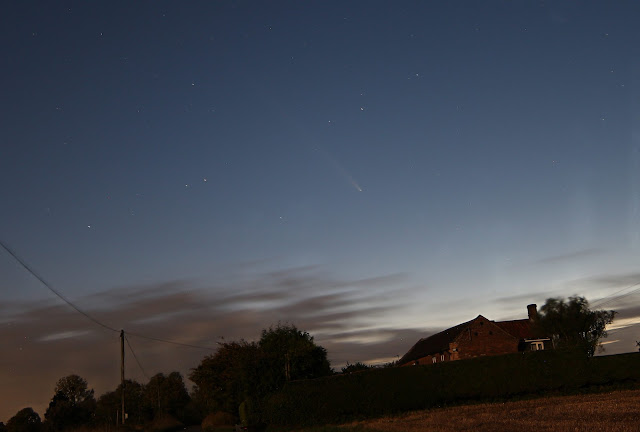
Comet Tsuchinshan-ATLAS, C/2023 A3 , Comet A3,

  A cosmic wanderer, Comet Tsuchinshan-Atlas or more commonly known as Comet A3 has traced its elliptical path through the solar system, a j...